Can You Drink Alcohol in a Parked Car in Ontario
Earlier this month, Ontario Provincial Police (OPP) and emergency services responded to a single-car rollover crash that was allegedly caused by a deer on the road that disrupted the driver's attempt to multitask. According to police, the driver and a passenger were trying to have sexual intercourse when the driver had to swerve to avoid the wayward deer, causing the car to hit a tree before rolling over in a ditch.
The 20-year-old driver was charged with dangerous operation of a motor vehicle and being a novice driver with a blood alcohol concentration above zero. While police smelled the odour of alcohol on the driver's breath, they did not find any alcohol containers in the vehicle.
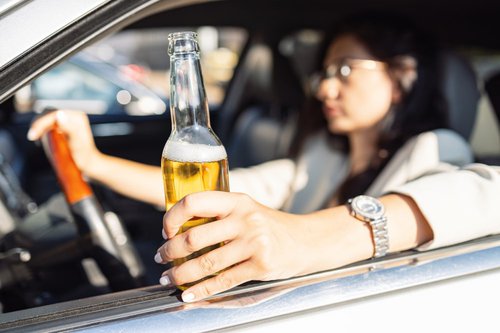
For whatever reason — perhaps because we at TorontoDUI are so focused on alcohol in relation to cars — this story seems incomplete. To be truly considered a case of multitasking, shouldn't the driver have had a beer in hand? Of course, maybe he was able to ditch the evidence before the police arrived.
In imagining the scenario, we can picture the driver with a beer in hand. However, our sober — as defined by being "straightforward and serious" — mental visualization of the incident places the couple in a parked car underneath the boughs of a tree. This negates any problems caused by the deer.
However, we suppose that the couple could face public nudity charges if an OPP officer decided to stop and investigate what that couple might have been doing under that tree. And, because we're visualizing the scenario with an opened beer or two in the car's cupholders, the officer might decide to lay charges based on Ontario's open container laws .
This, of course, begs the legal question of whether you can drink alcohol in a parked car in Ontario?
Short answer: As a practical matter, no. Parking the car does not create a safe harbour. Ontario's Liquor Licence and Control Act, 2019 restricts where liquor may be consumed and separately restricts open or readily available liquor in a motor vehicle that someone is driving or has care or control of — whether the vehicle is in motion or not. That provincial open-container framework is distinct from a Criminal Code impaired-driving or care-or-control investigation, which can carry far more serious consequences if police believe you were impaired while operating the vehicle.
The longer answer is that it can cost you a set fine if police catch an open-container violation — and it can escalate quickly if the same stop turns into an impaired-driving investigation. Let's take a closer look at the provincial rules, and why "I wasn't driving" is rarely the escape hatch people hope for.
First Things First
You now know that drinking alcohol in your car, parked or otherwise, is a bad idea under Ontario liquor rules. However, that might be the least of your troubles should police find an open can of beer or other alcohol container in your car. Empty containers are also likely causes of trouble, as police will often assume that the driver may have been nipping from a "roadie" or two.
With any sign of alcohol in your vehicle, police will often be far more interested in determining whether you have been driving impaired than they are in hitting you with a set fine for having an open container in the car. And if they do have cause to arrest you for any driving under the influence (DUI) charges, it's probably time for a little tutorial on what this might mean for your future.
Perhaps more importantly, drinking in your vehicle without driving it during your consumption — and even without intending to drive — can still put you at risk of a Criminal Code impaired-driving charge based on "care or control" of the vehicle. Under the Code , "operate" includes having care or control of a conveyance, so a parked car is not automatically outside the criminal framework. Care-or-control prosecutions can attract the same impaired-driving offence framework as cases that involve proven driving. The Crown does not have to prove that you were actually driving while impaired; occupying the driver's seat creates a statutory presumption of operation unless you establish you did not occupy that seat for the purpose of setting the vehicle in motion, and the case law also focuses on whether there was a realistic risk of danger. Signs of impairment, open alcohol in the vehicle, and your apparent ability to put the car in motion can all feature in that analysis. If that is the situation you are facing, speak with a Toronto DUI defence lawyer about your options.
Now, About You Drinking in a Parked Car in Ontario
As previously noted, if you want to drink in a parked car in Ontario, you can expect provincial consequences if caught. Ontario's Liquor Licence and Control Act, 2019 contains a wide set of alcohol-related offences, and provincial regulators are determined to restrict access to alcohol for anyone in a vehicle who is driving or has care or control of it.
Section 41 (1) of the Act states that "no person shall have or consume liquor in any place other than:
- a residence;
- premises in respect of which a licence or permit that permits consumption is issued;
- a private place as prescribed by the regulations; or
- …a public place designated by a by-law made by the council of a municipality" (and, under the current Act, certain designated provincial-park public areas).
If not for Section 41 (2), which allows possession of liquor that is in a closed container (and retail-store samples), you would not be allowed to have alcohol with you outside the places listed in the Act. Section 42 then regulates conveying liquor in motor vehicles: no person shall drive or have the care or control of a motor vehicle (as defined in the Highway Traffic Act ) or a motorized snow vehicle, whether it is in motion or not, while liquor is in the vehicle, except under the authority of a licence or permit, or if the liquor is (a) in a container that is unopened and the seal unbroken, or (b) packed in baggage that is fastened closed or not otherwise readily available to any person in the vehicle. Section 43 sets parallel rules for boats that are underway, with a closed-compartment option instead of baggage packing.
While this seems cut and dry, people often ask about a driveway scenario: can police sanction you for open alcohol in a vehicle parked on your private property? Section 41 (1) references a "private place as prescribed by the regulations." Under O. Reg. 745/21 , "private place" is defined narrowly — for example, a motor vehicle with sleeping accommodation and cooking facilities can be a private place while parked and being used as a residence, but not while it is on a highway. An ordinary passenger car sitting in a driveway is not, by itself, a regulated "private place." Separately, section 42's care-or-control open-liquor rule applies whether the vehicle is in motion or not. Treat a driveway parked-car drink as a high-risk idea, not a reliable legal loophole.
How Much That Open Container is Going to Cost You
Schedule 61 of the Ontario Court of Justice lists set fines for Liquor Licence and Control Act open-container and related vehicle offences (figures below are the listed set fines; court costs and victim fine surcharges can increase what you pay):
- "Driving motor vehicle with open container of liquor" — $175.
- "Having care or control of a motor vehicle with open container of liquor" — $175.
- "Driving motor vehicle with unsealed container of liquor" — $175.
- "Having care or control of a motor vehicle with unsealed container of liquor" — $175.
- "Driving motorized snow vehicle with open container of liquor" — $175.
- "Having care or control of a motorized snow vehicle with open container of liquor" — $175.
- "Driving motorized snow vehicle with unsealed container of liquor" — $175.
- "Having care or control of a motorized snow vehicle with unsealed container of liquor" — $175.
- "Driving motor vehicle with liquor in open baggage" — $150.
- "Having care or control of motor vehicle with liquor in open baggage" — $150.
- "Driving motorized snow vehicle with liquor in open baggage" — $150.
- "Having care or control of motorized snow vehicle with liquor in open baggage" — $150.
- "Driving motor vehicle with liquor readily available" — $150.
- "Having care or control of a motor vehicle with liquor readily available" — $150.
- "Driving motorized snow vehicle with liquor readily available" — $150.
- "Having care or control of a motorized snow vehicle with liquor readily available" — $150.
- "Operating boat underway with open container of liquor" — $175.
- "Having care or control of a boat underway with open container of liquor" — $175.
- "Operating boat underway with unsealed container of liquor" — $175.
- "Having care or control of a boat underway with unsealed container of liquor" — $175.
- "Operating boat underway with liquor not in a closed compartment" — $150.
- "Having care or control of boat underway with liquor not in a closed compartment" — $150.
The provincial schedule covers the common open-container and conveyance scenarios tightly. Looking for a creative loophole is a poor substitute for keeping liquor sealed or properly packed away from anyone in the vehicle — and for not drinking in the car at all.
If That Open Container Leads to a DUI, Contact Us!
The criminal defence lawyers of TorontoDUI aren't going to defend you from an open container charge, but we will provide you with expert DUI defence. With an outstanding record for successfully resolving DUI cases in the Toronto Area, contact TorontoDUI for your free initial consultation.