When Can an Impaired Driving Conviction be Pardoned in Canada?
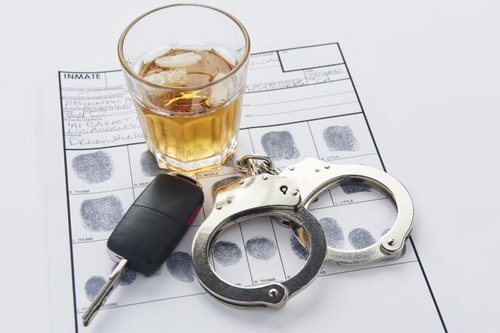
Short answer: Canada no longer grants traditional "pardons." Eligible applicants apply to the Parole Board of Canada for a record suspension. For most impaired-driving convictions, the wait is commonly five years (summary) or ten years (indictable) after the sentence is fully completed when the first offence was on or after 13 March 2012 — and can be three, five, or ten years for earlier first-offence dates.
When clients ask the criminal defence lawyers of TorontoDUI how to get an official pardon for their impaired driving conviction, they're usually surprised by the lack of a simple answer. For example, if you were to ask them when you can apply for a pardon after a DUI conviction, the answer could be three, five, or 10 years, depending on a range of variables.
“ When it comes to questions about DUI 'pardons,'" says TorontoDUI co-founding partner Jeff Mass, "the first thing we tell clients is that the Canadian government doesn't offer them. Instead, it offers those convicted of criminal offences to apply for what's known as a 'record suspension.' Rather than forgive an offender by erasing the record of the offence with a pardon, the government suspends public access to the criminal record from the Canadian Police Information Centre.
TorontoDUI co-founding partner Robbie Tsang adds that this is as close as someone can get in Canada to receiving a full pardon. "Canada's Criminal Records Act allows those who've received a record suspension to legally deny that they have a criminal record or conviction in most situations," he says. "For example, in filling out a private sector job application or rental forms, you can legally deny your DUI conviction. However, you cannot deny it with government-related jobs requiring security clearance, and Ontario laws require disclosure of specific convictions for jobs involving vulnerable populations."
The complexity of Canadian record suspension rules stems from multiple amendments and regulatory revisions to the Criminal Records Act (CRA) over the past two decades, including the renaming of "pardons" to "record suspensions" in 2010. Among the changes, let's start with some good news: as of January 1, 2022, the Parole Board of Canada's application processing fee dropped from $631 to $50.
Since 19 March 2020, the Parole Board has processed applications using the CRA eligibility criteria in place at the time of the applicant's first offence. The 2010 and 2012 CRA waiting-period changes are no longer applied retroactively to earlier first offences.
Let's examine what else you need to know about record suspensions for DUI convictions and how long you might have to wait to apply for one.
What Exactly is a Record Suspension?
According to the Government of Canada, a record suspension allows people who were convicted of a criminal offence, but have completed their sentence and demonstrated that they are law-abiding citizens for a prescribed number of years, to have their criminal record kept separate and apart from other criminal records. The stated purpose of the record suspension is to help those convicted access employment and educational opportunities and to reintegrate into society. A record suspension does not erase the conviction, and it does not guarantee entry or visa privileges to another country.
Managed by the Parole Board of Canada, once someone's criminal record has been suspended, it can only be reviewed by government officials under specific circumstances, including:
- A court order, typically spurred by a police investigation.
- National security considerations.
- Vulnerable sector checks in provinces that require them.
Thus, public requests for suspended criminal records will not reveal that such records ever existed, and police can review them only with a court order. However, the Parole Board of Canada can revoke the record suspensions of those who:
- Are convicted of a new indictable offence, and some summary offences.
- Are found to no longer be of good conduct.
- Were found to have made false, misleading, or withheld information in their application.
- Were found to be ineligible for the suspension when it was ordered.
Some criminal offences — though typically not impaired-driving offences themselves — are ineligible for record suspension. The eligibility time frames for a record suspension depend on the type of offence and when the first offence was committed. Eligibility also requires that those applying have completed their sentence, including imprisonment, probation, and payment of any fines, surcharges, and restitution. Under Parole Board rules, a driving prohibition or weapons prohibition does not need to have expired before the waiting period begins, and a record suspension has no effect on those prohibition orders.
The Parole Board assesses applications against the CRA criteria that applied at the first-offence date. These are the eligibility waiting periods after sentence completion:
Before June 29, 2010 —
- Five years for indictable offences.
- Three years for summary conviction offences.
Between June 29, 2010 and March 12, 2012 —
- 10 years for a serious personal injury offence (within the meaning of s. 752 of the Criminal Code ), including manslaughter, for which the applicant was sentenced to a prison term of two years or more, or a CRA Schedule 1 offence prosecuted by indictment.
- Five years for any other indictable offences and CRA Schedule 1 offences punished on summary conviction.
- Three years for other offences punished on summary conviction.
On or after March 13, 2012 —
- 10 years for indictable offences.
- Five years for summary conviction offences.
- Applicants may be ineligible if they were convicted of a CRA Schedule 1 offence (subject to limited exceptions) or of more than three indictable offences each punished with a sentence of two or more years.
Record Suspensions for DUI Convictions
Most impaired-driving and related Criminal Code convictions can qualify for a record suspension if the applicant meets the CRA waiting-period and good-conduct rules. Absolute eligibility still turns on the individual's full record — including any Schedule 1 history or multiple lengthy indictable sentences — so it is safer to confirm against Parole Board criteria than to assume every DUI file is automatically eligible.
Impaired driving is ordinarily a hybrid offence. The waiting period usually depends on whether the Crown proceeded summarily or by indictment. If the court cannot confirm the method of trial, the Parole Board applies the longest waiting period under the applicable CRA rules.
Many people whose first offence was before 2012 may already have reached the shorter historical waits once their sentence was fully completed, but each file still needs its own calculation. Those convicted of summary conviction DUI offences after March 13, 2012, are generally eligible five years after completing the last of their sentencing conditions. Those convicted of an indictable DUI offence can generally apply for a suspension 10 years after the last of their punishment has ended. For example, a DUI offender released from prison in 2022 for a 2015 indictable DUI offence may not be eligible until 2032. If the offender were subject to two years of probation after release, the earliest eligibility would likely be in 2034 — counting from the end of probation, not from the conviction date alone. Anyone with more than three indictable offence convictions that each carried prison sentences of two or more years may be ineligible for a record suspension under the post–13 March 2012 rules.
To apply for a record suspension from the Parole Board of Canada, you must carefully follow the application instructions , which include:
- Getting a copy of your criminal record.
- Getting your fingerprints taken by the police or an accredited service.
- Retrieving the court information of your conviction that includes proof and date of payment for any fines and court-ordered fees, and the method of trial where available.
- Getting a copy of your military conduct sheet, if you are a current or former member of the Canadian Armed Forces.
- Getting a local police records check for each city or town you've lived in over the past five years.
- Photocopying valid, government-issued documents that support your identity.
- Completing the Schedule 1 Exception form only if you have a Schedule 1 conviction that requires it.
- Filling out the Record Suspension application form.
- Completing the Measurable Benefit/Sustained Rehabilitation form, in which you clearly describe how the record suspension will provide you "with a measurable benefit and sustain your rehabilitation into society as a law-abiding citizen."
- Submitting the application with the $50 processing fee.
“ A record suspension doesn't erase your conviction, but it gives you a real chance to move forward without your past defining your future," explains Jeff Mass, co-founding partner of TorontoDUI . "With careful planning and a complete application, many Canadians can restore their opportunities in work, education, and everyday life.
FAQ
Can I still get a pardon for a DUI in Canada?
Canada no longer grants traditional pardons. Eligible applicants apply to the Parole Board of Canada for a record suspension, which keeps the record separate from other criminal records for most public purposes.
How long do I wait after an impaired-driving conviction?
For most files where the first offence was on or after 13 March 2012, the wait is commonly five years (summary) or ten years (indictable) after the sentence is fully completed. Earlier first-offence dates can use shorter historical waits. If the court cannot confirm method of trial, the Parole Board applies the longest applicable wait.
Does a record suspension erase the conviction or fix foreign travel?
No. It does not erase the conviction, and it does not guarantee entry or visa privileges abroad. A driving or weapons prohibition also continues on its own terms — a record suspension does not cancel it.
How much does the application cost?
As of January 1, 2022, the Parole Board's application processing fee is $50. Applicants still need fingerprints, court documents, local police checks, and related supporting materials.
Avoid the Need for a Pardon with Expert DUI Defence in Toronto
Clearing your reputation with a record suspension is just one of many aggravations you'll face if you're convicted of DUI in Canada. The legal experts at TorontoDUI strongly encourage everyone not to drive while impaired. However, should you fail to heed this advice, they suggest you secure the best possible DUI criminal defence if Greater Toronto Area police arrest you for DUI. To learn more about how the criminal defence lawyers at TorontoDUI can help strategize an effective defence against your impaired driving charges, contact them today for a free consultation.