Roadside Alcohol Screening Device—What You Need to Know
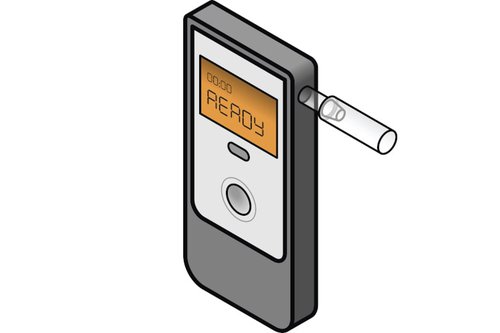
Short answer: Since December 2018, if a peace officer has an approved screening device (ASD) in their possession during a lawful stop, section 320.27(2) of the Criminal Code allows a demand for an immediate roadside breath sample — without needing prior suspicion that the driver has alcohol in their body. An ASD "fail" or "warn" is a screening result; it is not the same as an evidentiary breath test on an approved instrument at the station.
While Canadian police have had the legal authority to demand mandatory alcohol screening from any driver since December 2018, many Canadians still believe that an officer needs to have reasonable grounds to believe that a driver may be impaired before demanding a breath sample. "Some of our clients think we'll be able to get their impaired driving charges dismissed because an officer didn't have probable cause to demand a breath sample," says criminal defence lawyer Jeff Mass of TorontoDUI . "They are kind of shocked when we tell them Canadian legislators amended DUI laws in 2018 to allow police to demand roadside alcohol breath screening from any driver, even absent indication of possible impairment."
TorontoDUI defence lawyer Robbie Tsang adds, "We're amazed that so many Toronto drivers don't know that police have this authority, especially given that OPP (Ontario Provincial Police) announced last May that its officers would demand a breath sample from every driver pulled over for a traffic stop in the GTA. They were quite public about this new policy, and the news media certainly broadcasted it." Mass and Tsang further noted the belief that police still need probable cause to demand roadside screening, which causes some drivers to refuse the breath test. "They're convinced the lack of probable cause will help get their 'refusal to blow' charges dropped," says Tsang.
Whether you're pulled over by an OPP, RCMP, or Toronto Police Service officer, if they're equipped with an approved roadside screening device, there is a high likelihood they will demand you undergo mandatory roadside alcohol breath testing. Given the apparent lack of public understanding about mandatory alcohol screening in Canada, TorontoDUI has put together this primer on what you need to know about it and roadside screening devices.
Canadian Police Usage of Roadside Screening Devices
Section 320.27 of the Criminal Code now sets out police authority to use portable breath alcohol and bodily substance drug screening devices. Under section 320.27(1), that authority still hinges on an investigating police officer having "reasonable grounds to suspect that a person has alcohol or a drug in their body" and that the person has operated a conveyance within the preceding three hours. Without these grounds, a suspicion-based demand for roadside screening can be challenged as an unlawful search. In court, challenging a lack of reasonable grounds helped numerous defendants get their DUI charges dropped over the decades. (Mandatory alcohol screening without suspicion is the separate power in section 320.27(2), discussed below.)
Meanwhile, Canadian police agencies only made limited usage of portable screening devices in the 1980s and the first half of the 1990s. The reliability and accuracy of early model roadside screening devices were frequently challenged in court, as were protocols and procedures police used (or failed to use) in their roadside screening. Additionally, Canadian courts quickly established that the screening results could not be used as evidence of blood-alcohol concentration against DUI defendants in the way an approved-instrument reading can. Police could only use the screening to help determine whether to conduct additional breathalyzer or blood testing for admissible evidence.
The technology used in today's roadside screening devices makes them far more dependable than early models, while amendments to the Criminal Code dictate guidelines for police roadside screening and device testing and calibration. Screening results are still treated as a roadside investigative step rather than a substitute for an evidentiary breath test on an approved instrument such as an Intoxilyzer at the station, but they are highly effective at helping police establish grounds to demand additional impairment testing. Thus, today, many officers in all police agencies are equipped with roadside screening devices.
Mandatory Alcohol Screening Comes into Play
Enacted in December 2018, Section 320.27 (2) of the Criminal Code states:
“ If a peace officer has in his or her possession an approved screening device, the peace officer may, in the course of the lawful exercise of powers under an Act of Parliament or an Act of a provincial legislature or arising at common law, by demand, require the person who is operating a motor vehicle to immediately provide the samples of breath that, in the peace officer's opinion, are necessary to enable a proper analysis to be made by means of that device and to accompany the peace officer for that purpose."
In layman's terms, this gives the police authority to demand any driver to exit their vehicle for the purpose of providing a breath sample into an approved screening device to determine whether they may be impaired by alcohol — without needing suspicion of alcohol. From a defence lawyer's perspective, a driver stopped by police should be aware of two critical elements of the legal language: that the officer has an approved screening device in their possession, and the term "immediately" when police made a screening demand. We have seen cases in which judges have dropped charges because an officer requested another officer bring the screening device to their location and in which police dallied before making the demand or carrying out the actual screening.
Consequences of Refusing Mandatory Alcohol Screening
As amended in 2018, Section 320.15 of the Criminal Code makes it an offence to fail or refuse to comply, without reasonable excuse, with a lawful demand for alcohol and/or drug screening. However, under the law, police technically still need "reasonable grounds" to suspect that a driver has drugs in their system before demanding drug screening under section 320.27(1).
The Federal penalties for refusing roadside screening are serious and overlap with other impaired-driving offences, but they are not identical to a basic DUI conviction: for a first offence, section 320.19 sets a higher minimum fine for a section 320.15(1) refusal than for a basic section 320.14(1) impaired-operation conviction. Ontario's Highway Traffic Act scheme also imposes additional administrative consequences. According to ontario.ca , a first refuse-or-fail occurrence can include an immediate 90-day administrative driver's licence suspension, a $550 administrative penalty, and seven-day vehicle impoundment. Drivers who are ultimately convicted of a refuse-screening offence face a driver's licence suspension, mandatory alcohol/drug education or counseling, and other onerous penalties.
Roadside Breath Testing in Practice
When police demand roadside screening, they must clearly explain the driver's legal obligation to comply with testing and the legal consequences of refusing it. An approved roadside screening device must be in their possession when the demand for testing is made. Officers are also required to ensure that their device is properly calibrated and tested. An officer's demand for screening must be carried out promptly, and the testing itself cannot cause an unreasonable detainment of the driver. For their part, a driver generally does not have the right to consult with their lawyer before complying with roadside screening.
In Ontario, if the approved screening device indicates a "fail" (typically aligned with a blood alcohol concentration (BAC) at or above 0.08%), police can arrest the driver for a criminal impaired-driving investigation and transport them to the police station for additional testing on an approved instrument such as an Intoxilyzer. If the device indicates a BAC in the 0.05%–0.079% warn range, officers can impose provincial warn-range administrative consequences. As summarized on ontario.ca for changes reflected as of July 1, 2026, a first warn-range occurrence can include an immediate seven-day licence suspension, an education course, and a monetary penalty. Warn-range consequences are administrative; they are not a Criminal Code "over 80" charge.
Police can arrest a driver for a DUI based on refusing roadside screening for outright refusing to submit to roadside testing or failing to provide a suitable breath sample into the device. To provide a suitable sample, drivers must blow hard enough to trigger sensors that activate a buzzing sound. If the buzzer fails to sound, an officer will warn the driver to try again with a more robust exhale or risk arrest if they fail to trigger the buzzing.
Raising Defences Against Mandatory Alcohol Screening
Criminal defence DUI lawyers generally recommend that drivers should always submit to the mandatory alcohol screening. Mounting a defence against screening refusal DUI charges is challenging unless there are obvious police procedural mistakes or the driver has a reasonable excuse, such as relevant medical issues. Reasonable medical excuses raised for refusing roadside screening have included respiratory problems or recent oral surgery; whether any particular condition amounts to a reasonable excuse is fact-specific.
For Expert DUI Defence in the GTA, Contact TorontoDUI
If you're charged with DUI in the Greater Toronto Area, you should always secure the services of an experienced criminal defence DUI lawyer. A DUI conviction carries harsh penalties and a life-changing criminal record. A competent defence lawyer can help you navigate the legal arena and help strategize the most effective defence. With a long record of defending thousands of Toronto-area clients arrested for DUI, contact TorontoDUI for a free consultation.