How Charter Rights Impact Your DUI Stop and Breathalyzer Evidence
Of the nearly 18,000 DUI cases in Ontario that were withdrawn or stayed during the 2023/2024 Statistics Canada reporting period, a significant number of them likely settled favourably to the defendant due to police Charter Rights Violations during the DUI stop or breathalyzer processing. This, according to TorontoDUI co-founding partner Robbie Tsang , who has extensive experience raising Charter defences in impaired driving cases. “Police must thread a delicate line between ensuring the protection of a defendant's Charter Rights and investigating, arresting, and processing them for a DUI offence," he says.
“Police officers are prone to making mistakes just like any other human," adds Robbie's TorontoDUI cop-founding partner Jeff Mass . “With the legal complexities posed by Charter Rights, it's little wonder there are so many police Charter breaches with DUIs," he says. “As for how often Charter defences succeed in DUI cases, we'd say, 'a lot,' and we've certainly had significant success raising successful Charter challenges in the GTA over the years."
Given the suspected significant number of DUI Charter violations in Ontario, let's further examine your Charter Rights in a DUI stop and the primary breathalyzer evidence Charter challenges. We'll review the basics by answering the most frequently asked questions we hear from our clients about Charter Rights and DUIs.
What Charter Rights Apply During a DUI Stop and Breathalyzer Testing?
Breaches of Sections 8, 9, and 10(b) of the Canadian Charter of Rights and Freedoms are the primary challenges DUI defence lawyers raise in impaired driving cases. While all play a role in roadside DUI stops, only Sections 8 and 10(b) typically apply with breathalyzer testing. Let's examine these rights and how police may breach them during roadside DUI stops or during breathalyzer testing.
Section 8 Charter, DUI Search
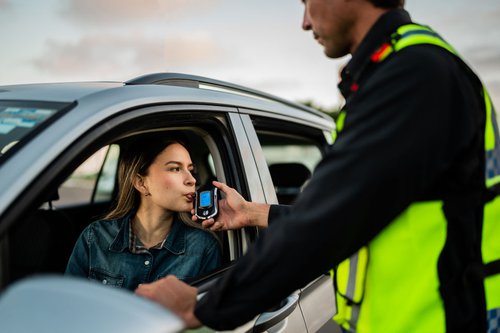
Section 8 of the Charter protects people's privacy by giving them the right to be secure against unreasonable search or seizure. This right addresses police “seizure" of breath, saliva, and blood for impairment screening, as well as their demand that a driver undergo roadside standardized field sobriety testing (SFST). Generally, to comply with this Charter Right, police must have reasonable grounds to suspect alcohol and/or drug impairment before they can demand that a driver submit to roadside alcohol or drug screening or SFST. However, due to 2018 Criminal Code revisions, Section 320.27(2) of the Code authorizes police to require any driver to submit to mandatory alcohol screening (MAS), provided they have an approved screening device in their possession .
For correct breathalyzer testing, Section 8 requires police to have reasonable grounds to believe that the driver is impaired. Thus, an officer who demands that a driver undergo breathalyzer testing without any evidence of impairment is likely breaching this Charter Right. Additionally, procedural errors can render the “seizure" of the breath sample as an unreasonable search within the context of Section 8.
Section 9 Charter, Unlawful Detention
Section 9 of the Charter addresses “arbitrary detention" to ensure that “a person's liberty is not to be curtailed except in accordance with the principles of fundamental justice." Canadian courts have determined that DUI stops are not arbitrary and are justified for public safety. However, they breach Section 9 and become unlawful if they:
- Are unusually prolonged.
- Occur on private property,
- Are motivated by bias or profiling.
- Exceed the stop's initial purpose without any grounds.
Language in Section 320.27 of the Code uses the word “immediately" in the context of performing roadside screening. Courts have determined that this means “without delay." While a subjective judgment, courts consistently rule that delays exceeding 30 minutes constitutes a breach of Section 9. However, they've also ruled that shorter delays are unlawful if the officer cannot reasonably justify them.
Section 10(b) Charter, Right to Counsel
Section 10(b) of the Charter gives anyone arrested or detained by police the right to retain and consult with counsel without delay and requires the police to inform those arrested or detained of this right. While DUI stops are a form of detention, Canadian courts have determined that the “immediately" clause in the Code's language, combined with the interest of public safety, renders the right to counsel moot in advance of undergoing the roadside screening.
However, if arrested for DUI after screening, or otherwise detained for further investigation of suspected impairment, police must inform the suspect of this right without delay and before performing breathalyzer or other testing. They also must make every effort to facilitate the suspect's contact with either their own lawyer or duty counsel and ensure that any consultations are conducted in private. Section 9 Charter breaches occur when an officer fails to follow any of these protocols.
What is the Right to Counsel During a DUI Investigation?
Section 10(b) of the Charter guarantees the right of anyone arrested or detained by police to be informed of their right to retain and consult with a lawyer without delay and to do so before the police can secure breathalyzer or drug-testing evidence. If you cannot contact your own lawyer, you will be provided access to duty counsel. Note that this right does not apply to mandatory roadside alcohol screening authorized by law.
When is a DUI Stop Considered Unlawful?
Canadian courts have generally held that roadside DUI stops are lawful even in the absence of suspicion of impaired driving. An unlawful DUI stop in Canada happens when the police breach Section 9 of the Charter by:
- Making the stop on private property.
- Making the stop due to bias, racial profiling, or other improper purpose.
- Detaining the driver without arrest for an unreasonably long period.
Can DUI Evidence be Excluded Due to Charter Violations?
Yes, excluding DUI evidence due to Charter Rights Violations often occurs in Canadian DUI cases (see below).
Can Breathalyzer Results be Thrown Out in Court?
Absolutely. Sections 8, 9, and 10(b) Charter breaches, as well as police failure to follow strict Criminal Code protocols for breathalyzer calibration and operation, provide legal justification for a judge to exclude breathalyzer evidence. In determining whether to exclude such evidence, judges balance the seriousness of the breach with society's interest in reliable adjudication.
What Happens if Police Delay My Access to a Lawyer?
If your defence lawyer can prove that the police breached your Section 10(b) right to consult with counsel, the judge will balance the seriousness of the breach against society's interest in protecting public safety via DUI laws. A judge might let a minor delay slide, but a flagrant or negligent delay that compromised your ability to make informed decisions usually leads a judge to exclude key evidence, like breathalyzer results.
Consult with TorontoDUI for Your Charter Defence
The criminal defence DUI lawyers of TorontoDUI are intimately familiar with all elements of the Charter of Rights and Freedoms and have successfully challenged 1000s of Greater Toronto Area impaired driving cases based on Charter violations. With an outstanding record of defending our GTA clients against all impaired driving-related charges, contact TorontoDUI today for a free consultation.