

Distracted Driving in Ontario
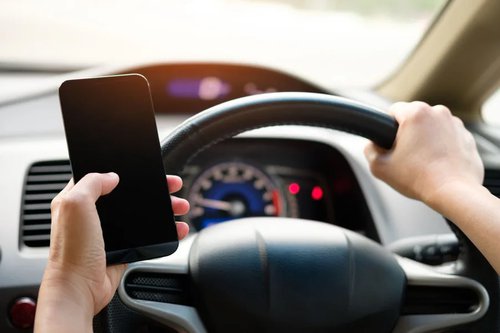
Reaching for your phone while stopped at a red light feels harmless. Under Ontario law, it is the same offence as reading a text at highway speed. The province's hand-held device and display-screen rules apply while you are driving, including when you are stopped in traffic or at a red light. For a fully licensed driver, a first conviction means a $615 set fine, three demerit points, and a three-day licence suspension. The sections below set out what the law actually prohibits, what each conviction costs, and when a distracted drive becomes a far more serious charge.
What counts as distracted driving in Ontario
Distracted driving in Ontario means using a hand-held wireless communication or entertainment device, or viewing a display screen unrelated to driving, while in care of a vehicle. The rule applies even when you are stopped in traffic or at a red light.
The common thread is the device in your hand, not whether the car is moving. The rule is written around holding and viewing, so sitting in gridlock or idling at a light with a phone in your palm is treated the same as scrolling at speed. Switching the engine off and pulling fully out of traffic is a different situation; being stopped on the road is not.
In practice, the law covers four things while you are driving:
- Using a phone or other hand-held wireless communication device to text or dial. You may only touch a device to call ambulance, police, or fire.
- Using a hand-held electronic entertainment device, such as a tablet or portable gaming console.
- Having a display screen visible to you that is not related to driving.
- Programming a GPS on a cell phone or hand-held device, except by voice command.
The display-screen point is broader than phones. A screen that shows something unrelated to driving, a video for example, is not allowed to be visible to you in the driver's seat, whether it belongs to the car or to a passenger's device. Screens that support the drive, such as a navigation display, sit outside that prohibition.
The narrow exception is an emergency: you can touch a device to call 911 for an ambulance, the police, or the fire service. That is the only reason the law allows you to pick up a hand-held phone while driving.
Hands-free use is allowed. You can operate a device through an earpiece, a lapel button, or a Bluetooth connection, provided you are not holding it and your attention stays on the road. Mounting a phone and controlling your route by voice command keeps you on the right side of the rule; picking the phone up to tap in an address does not.
Some habits that look like distraction sit outside this particular offence. Eating, drinking, grooming, smoking, reading, and reaching for objects are not part of Ontario's distracted-driving law. They are not harmless, though. Any of them can still support a careless-driving charge if your driving puts other people at risk, which is covered further down. The distinction matters at the roadside: an officer who sees a phone in your hand is dealing with a specific hand-held offence, while the other behaviours are judged by how you were actually driving.
Fines, demerit points, and suspensions for a full licence
For drivers who hold a full A to G licence, and for the M motorcycle class, the penalty climbs with each conviction. The $615 figure quoted everywhere is the out-of-court amount: the set fine you pay to settle the ticket without going before a court, and it already includes a victim surcharge and the court fee. If you instead receive a summons, or you fight the ticket and lose, the fine is set by the court and can be considerably higher.
The three conviction levels are:
- First conviction: $615 if settled out of court, or a fine of up to $1,000 if you receive a summons or fight the ticket and lose; three demerit points; a three-day licence suspension.
- Second conviction: $615 if settled out of court, or a fine of up to $2,000 in the summons or lost-fight case; six demerit points; a seven-day licence suspension.
- Third and further convictions: $615 if settled out of court, or a fine of up to $3,000 in the summons or lost-fight case; six demerit points; a 30-day licence suspension.
The gap between the $615 set fine and the court-set maximums is the main reason these tickets are worth taking seriously rather than simply paying. Settling out of court is quick, but it is still a conviction that carries the demerit points and the suspension; the only part that changes in the summons or lost-fight scenario is how high the fine can go. The suspension is a separate consequence from the fine and the demerit points, and it lands on every conviction, not only on repeat offenders. A licence reinstatement fee is also payable each time your licence is suspended. The province sets that fee; the amount is not stated on the distracted-driving rules themselves, so confirm the current figure before you assume a number.
Novice drivers
Drivers still in the Graduated Licensing System, meaning G1, G2, M1, and M2 holders, pay the same fines as fully licensed drivers but are treated differently in two ways. There are no demerit points, and the suspensions are longer. A first conviction brings a 30-day suspension, a second a 90-day suspension, and a third conviction cancels the licence entirely. At that point the driver is removed from the Graduated Licensing System and would have to start and complete that program again from the beginning. The logic is straightforward: graduated licensing exists to build road experience under tighter limits, so a distraction conviction during that stage carries heavier licence consequences even though the dollar figures match those for a full licence.
When the same drive becomes careless driving
Distracted driving is a Highway Traffic Act offence, but the same trip can cross a line into something heavier. If the distraction endangers other people, including when you are using a device hands-free, you can be charged with careless driving. That charge carries six demerit points, fines of up to $2,000 and a jail term of up to six months, and a licence suspension of up to two years. Beyond that, dangerous driving is a criminal offence, not a traffic ticket. Where those charges begin and how they differ is its own subject, so rather than repeat it here, see our guide to the differences between careless driving, dangerous driving, and criminal negligence .
A roadside stop that also involves alcohol or drugs
A stop that begins over a phone can widen quickly. If an officer forms a suspicion about alcohol or drugs during the interaction, the matter moves well past the Highway Traffic Act. Impaired driving is charged under the Criminal Code and brings its own licence and criminal consequences that sit apart from the distracted-driving penalties above. If a routine distracted-driving stop has turned into an impaired-driving investigation, the team at Toronto DUI can explain where you stand and what the next steps look like.