

Mandatory Alcohol Screening in Ontario
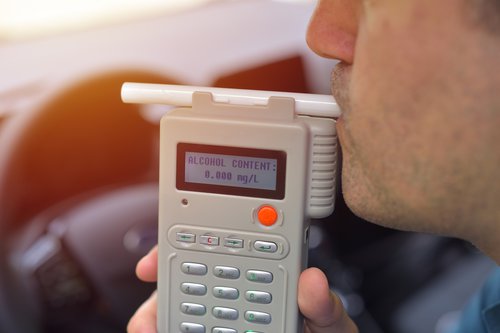
Mandatory alcohol screening (MAS) been the law of the land since December 2018. Yet, many motorists do not realize that Canadian police officers can demand MAS from any driver on a public road. "The lack of public awareness about mandatory alcohol screening seems surprising," says TorontoDUI co-founding partner Jeff Mass . "The Ontario Provincial Police have a policy that strives to conduct screening with every routine stop in high-traffic areas. We see several clients each month who have no idea that police do not need signs of impairment to order roadside screening."
Jeff's co-founding TorontoDUI partner, Robbie Tsang , adds, "Many unaware clients think we can quash their DUI charges due to a lack of probable cause. Unfortunately, we can't mount a defence based on that faulty assumption, though we strive to uncover other flaws with police procedures during the screening and arrest. For example, a crucial question we ask such clients is whether the officer had an approved screening device with them when they demanded a breath sample?"
TorontoDUI lawyers ask this question of DUI clients because the police are only authorized to conduct MAS if they have an approved screening device in their possession. "If they call for backup in this regard, we can challenge the lawfulness of the screening," notes Jeff. "This can often scuttle the Crown's case."
Let's further examine the issue of mandatory alcohol screening in Ontario by reviewing the most frequently asked questions Jeff and Robbie hear from clients.
What is the Legal Basis for Mandatory Alcohol Screening in Ontario?
Bill C-46 amended the Criminal Code in 2018 to strengthen impaired driving laws. Section 320.27(2) of the Code authorizes the police to order any motorist to immediately provide a breath sample into an approved screening device. The statutory language states:
"If a peace officer has in his or her possession an approved screening device, the peace officer may, in the course of the lawful exercise of powers under an Act of Parliament or an Act of a provincial legislature or arising at common law, by demand, require the person who is operating a motor vehicle to immediately provide the samples of breath that, in the peace officer's opinion, are necessary to enable a proper analysis to be made by means of that device and to accompany the peace officer for that purpose."
| Requirement | What It Means |
|---|---|
| Lawful stop | Traffic stop must be legal |
| Approved screening device (ASD) | Officer must have device in possession |
| Immediate demand | Driver must comply without delay |
| No suspicion required | No signs of impairment needed |
What Happens to Drivers Who Refuse Mandatory Alcohol Screening?
Refusing to comply with a lawful demand for MAS or failing to provide a suitable breath sample without a "reasonable excuse" is a criminal offence that carries similar federal penalties upon conviction as a standard DUI. For a first-time offence, these include:
- Maximum 10 years' imprisonment if charged as an indictable offence; two years as a summary conviction offence (though courts rarely impose incarceration terms on first-time DUI offenders unless there are aggravating circumstances).
- A mandatory minimum $2,000 fine (higher than the mandatory minimum $1,000 for a standard DUI).
- Minimum one-year driver's license suspension.
Ontario law imposes the following immediate administrative penalties on those charged with failing to comply with an officer's MAS demand:
- 90-day driver's license suspension.
- Minimum seven-day vehicle impoundment.
- $550 administrative fine.
Subsequent offences ratchet up the imposed penalties to include mandatory minimum incarceration terms and longer driver's license suspensions. In addition to the basic federal and provincial penalties for the offence, offenders are also subject to:
- Mandatory participation in alcohol/drug treatment or educational programs.
- Mandatory enrollment in an ignition interlock program upon license reinstatement.
- Assorted fees.
- Significant insurance premium increases.
- A permanent criminal record.
| Action | Legal Outcome |
|---|---|
| Comply with MAS | Screening completed, no charge (if passed) |
| Refuse demand | Criminal offence (s. 320.15) |
| Fail to provide sample | Same as refusal |
| Provide invalid sample | May be treated as failure |
What is a "Reasonable" Legal Excuse to Refuse Mandatory Alcohol Screening?
Ontario and Canadian courts have established an exceptionally high legal bar for defendants seeking to challenge their refusal to submit to MAS based on the grounds of a "reasonable excuse." Courts require that the claimed excuse needs to exceed a "balance of probabilities" threshold, backed by documentary or expert evidence, that the accused was incapable of providing a breath sample. Reasonable excuses that have managed to pass this legal bar include:
- Severe medical or physical conditions making it objectively impossible to provide a breath sample (e.g., severe asthma, advanced COPD, recent throat/chest surgery, etc.).
- Mental or cognitive incapacity that genuinely prevented the accused from understanding the MAS demand.
- Language or communications barriers that reasonably prevented the accused from understanding the officer's MAS demand.
| Type of Excuse | When It May Apply |
|---|---|
| Medical condition | Physically unable to provide sample |
| Cognitive impairment | Could not understand demand |
| Language barrier | Could not reasonably comprehend instructions |
| Device issues | Equipment malfunction |
Have Canadian Courts Upheld the Constitutionality of MAS ?
Canadian courts have consistently upheld the constitutionality of MAS, ruling that its potential infringements on Section 8 (unreasonable search and seizure) and Section 9 (arbitrary detention) Charter Rights are justified as reasonable limits under Section 1 of the Charter. In short, lower and appeals courts across the country have determined that the public benefits of preventing impaired driving outweigh potential Charter Rights violations. The Supreme Court of Canada has denied leave to appeal these rulings, effectively leaving the appellate rulings on the issue intact.
Are There Any Legal Loopholes in Mandatory Alcohol Screening?
As written in the Code and established by judicial precedent, two elements of Section 320.27(2) can give rise to legal loopholes that defendants have successfully used to challenge the lawfulness of an officer's MAS demand. First, courts have ruled that MAS demands are only lawful if an officer "has in his or her possession an approved screening device." They have further ruled that an officer cannot radio or call another officer to bring an ASD to the scene.
The timeliness of an officer's MAS demand and actual taking of the breath sample is also open to potential legal challenge due to the statutory language's stress on the driver "immediately" providing a breath sample. The courts place the onus on the driver to provide a breath sample within a reasonable time. However, unexplained delays between the demand and actual screening are subject to judicial review when an officer's actions may be the cause. The legal concern is that such delays may constitute a Charter Rights violation of arbitrary detention, unreasonable search, or the right to consult counsel. Some courts have ruled that prolonged unexplained or unreasonable delays exceeding 20 minutes have breached a driver's Charter Rights.
| Legal Issue | Why It Matters |
|---|---|
| No ASD on officer | Demand may be unlawful |
| Delay in testing | May violate Charter rights | Improper procedure | Grounds to challenge evidence |
| Rights violation | Potential exclusion of evidence |
Does the RCMP Have a MAS Policy Similar to the OPP's?
The RCMP does not have a national or uniform screen-with-every-traffic-stop policy like the OPP's. However, RCMP divisions and detachments have discretion to implement such policies on a regional or campaign-style basis. In general, the OPP is recognized as having one of the most proactive MAS policies in the country.
Consult with TorontoDUI for Expert Impaired Driving Defence
The criminal defence lawyers of TorontoDUI have successfully defended 1,000s of clients against impaired driving charges, and are intimately familiar with the legalities of mandatory alcohol screening. To learn how we can help you successfully resolve your DUI charges in the Greater Toronto Area, contact TorontoDUI today for a free consultation.